Learn the beginning steps of hand-knitting in the video below!
Enjoy!

Showing posts with label San Francisco. Show all posts
Showing posts with label San Francisco. Show all posts
Monday, December 10, 2012

Monday, November 5, 2012
Erica Tanov Collaborates With Paper Artist Emily Payne
It's hard not to fall in love with the seamless collaboration between fashion designer Erica Tanov (feature coming soon!) and artist, and paper specialist Emily Payne.
That's when craft enables you to turn simple objects into wonderful, dreamy pieces.
See for yourself!
Erica Tanov / Emily Payne from Emily Payne on Vimeo.
Saturday, October 20, 2012
Gravel & Gold – Find Out Everything About Their Community Of Artists And Their Crafts

How often do you ask yourself where your oranges and tomatoes come from? Do you ever wonder where on earth were the clothes you wear made, and how? I guess the meaning goes beyond a tag.
Living in San Francisco, we have come to fall in love with a counter culture of products that are basically opposite to the overwhelming fast-fashion merchandise at department stores. Most of us will rather focus on the people, fair trades and the crafts essential to the creation of things we eat and use every day.
Now, shopping is already exciting, but it gets so much better when you know that what you are buying is special. Now, imagine entering a store where every product sold is especially chosen because of the message behind it?
Treasure-hunt spot Gravel & Gold is one of these unique stores around the Mission district, where blankets, knives to hand dyed ties, funky jewelry and organic cotton clothes coexist in the same space.


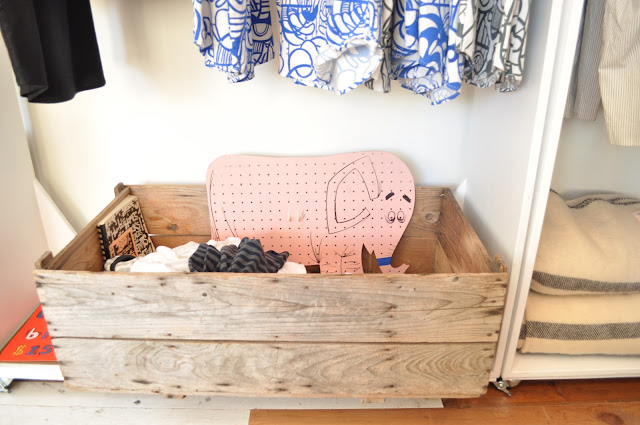
You feel like visiting a funky friend’s house when coming into the corner store on 21st Street and Lexington – a naturally lit living room with rights to cozy sofa in the corner and wooden décor. The point is to hang out and discover what the charming, ‘70s looking place beholds. For instance, their charming wooden wall- and mosaic/tiled-dressing room transforms into a catering and bar station during dinner parties, and food–related workshops hosted at the store.
Random notes are also pasted on the walls besides products to remind us a bit of how merchandise, like belts, jams and leather sandals are made – by whom, and where. “A huge part of the shop is putting the emphasis on the makers themselves,” said manager Em Gift on a visit I did last week. That might explain not only the fact that they know their vendors personally, but the personalized space that each one is given inside the store, and in Gravelandgold.com – where a small profile and links to the brands’ own website can be found.
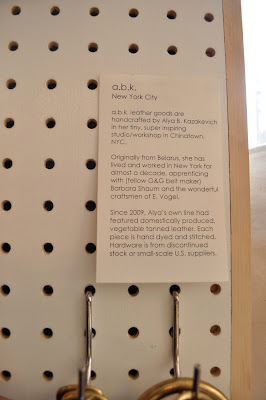 What we have here is a network of artists connected by Gravel & Gold. The store was founded in 2008 by friends Cassie McGettigan, Lisa Foti-Straus and Nile Nash. None of them had experience in fashion, or actually created pieces like the ones they feel proud to sell today, but it was a junction of similar sensibilities towards what goes on behind interesting products. “Where do you buy your socks, your soap, and who makes this leather bag?” were questions that came up regularly, making it a point to build a place – pet project – where unique, high-quality products, eco-friendly practices, fair trades, and some dinner parties here and there would link.
“An additional way to activate our emphasis on the creation of the products is to get makers to come in and host workshops,” said Em about the limited to 10-folks events that range from learning the art of pepper jelly, to how to craft leather pot-hangers for floating indoor gardens. “It’s just another way to sort of build a community around makers.” Great relationships, if not friendships have been the outcomes of these collaborations.
That’s where G&G’s newest endeavor falls in. They’ve started special product collabs with the likes of R.P. Miller Stripey Shirts from Pennsylvania, which translate into essential pieces that also carry a G&G tag. “Now we are also starting to produce our own stuff, and design textiles. – a new chapter of Gravel & Gold.” Canvas totes with leather handles, pillowcases, and interesting types of cotton and silk-wear, with exclusive boobies- and panda face prints, are highlights inside the store.
After a lot of traveling, shared interests, and opened mind and eyes, everything pretty much fell into place. “We care about things that are made with quality and distinction.” I guess we do, too.

Photos and text by Laura Acosta


You feel like visiting a funky friend’s house when coming into the corner store on 21st Street and Lexington – a naturally lit living room with rights to cozy sofa in the corner and wooden décor. The point is to hang out and discover what the charming, ‘70s looking place beholds. For instance, their charming wooden wall- and mosaic/tiled-dressing room transforms into a catering and bar station during dinner parties, and food–related workshops hosted at the store.
 |
| Is/Was Projects Ties |

“An additional way to activate our emphasis on the creation of the products is to get makers to come in and host workshops,” said Em about the limited to 10-folks events that range from learning the art of pepper jelly, to how to craft leather pot-hangers for floating indoor gardens. “It’s just another way to sort of build a community around makers.” Great relationships, if not friendships have been the outcomes of these collaborations.
 |
| Original Gravel & Gold printed dresses and shirts |
That’s where G&G’s newest endeavor falls in. They’ve started special product collabs with the likes of R.P. Miller Stripey Shirts from Pennsylvania, which translate into essential pieces that also carry a G&G tag. “Now we are also starting to produce our own stuff, and design textiles. – a new chapter of Gravel & Gold.” Canvas totes with leather handles, pillowcases, and interesting types of cotton and silk-wear, with exclusive boobies- and panda face prints, are highlights inside the store.
After a lot of traveling, shared interests, and opened mind and eyes, everything pretty much fell into place. “We care about things that are made with quality and distinction.” I guess we do, too.
 |
| Selection of R.P. Miller Stripey Shirts |
 |
| Rachel Corry Leather Sandals |


Photos and text by Laura Acosta
Monday, October 8, 2012
More videos of Hermès - Festival des Métiers
I hope you've enjoyed the videos on the Hermès Festival last month in San Francisco.
Here is another video of some of the other crafts presented within the same tent!
Enjoy!
Here is another video of some of the other crafts presented within the same tent!
Enjoy!
Silk-Screen Demonstration
Take a look at this scarf silk-screen demonstration from the Hermès - Festival des Métiers event in San Francisco
Enjoy!
Enjoy!
Monday, October 1, 2012
Has Visual Merchandising turned into an Art Form? We say yes!
San Francisco might not be the most fashionable city, but once in a while it amazes us with a the creative input up-and coming designers, boutiques, and the work of artists turned designers, or installation artists turned visual merchandisers.
Kavin Orantes, the new Visual Director at high-end retailer Wilkes Bashford might not have planned to develop a career in fashion. But as shown in his windows bellow, he might have just found the place to express his love for clothes and creativity.
We had a little chat with him about the craft of directing the visuals at Wilkes.
 |
| Pre-fall windows at Wilkes Bashford |
What does your work at Wilkes Bashford entail?
My work is mainly consists in the visual display of all the brands at Wilkes, starting with the window displays – from sketch to actually putting on the windows. I also do merchandising, and sometimes a little bit of administrative work, collecting records for the store’s buyers.
With your background in fine arts, how has this helped you to create a visual identity for the store?
My background in fine arts has helped me in terms of understanding color, and how to compose window displays. So, the windows are created as I would create a painting – starting with the rhythm, the composition, colors, the space, and the unity of it all. My goal is to bring it out, and push it forward into a more artistic view of windows, and not just have clothing displayed in plain air. I can create a story, and actually enhance the look of the clothes.
Also, inside the store I oversee the styling of the mannequins and forms, the color story of absolutely everything. The merchandising for me is more based on color, and that way I can have a synchrony in each floor. The point is to make it look beautiful, and then organize it, so that the customers feel attracted to the clothes.
Tell me about these two windows that you created recently.
The first window is called “From the Sketch.” It was a sales window. The whole point was to put sketches of the garments that we carry at the store. First it was just sketches of garments. And to be honest, at that part I was just playing, an planning to do a huge collage with clothes on the window. But when I was actually putting it all together I came up with the idea that it would be better to put “paper clothing” on the forms. So I created some dresses, sports jackets and shirts with the sketches I had done.
 |
| From the sketch |
 |
| Sales window |
The second window has a traveling them and it’s called “And away we go.” The backdrop is made of vintage postcards from different parts of the world – these had been collected over the years by Wilkes’ manager of both stores. To portray this story we used one of our biggest brands, Brunello Cuccinelli. Their garments are really versatile, and you can actually wear them on different occasions, everywhere in the world. They not only matched the idea of travel, the brand look is trimmed and young, and their color scheme and fabrics give a great example of luxury travel garments. I was trying to make it look cool with airplanes, cutting the window in spaces, and thus, framing the different looks on the window.
 |
| And Away we go! |
How has your craft, and the different techniques that you’ve learned along the years helped you accomplish this kind of creative work?
I have the vision of an artist, but I need it to fit with the vision of a visual merchandiser. Now I’m using them both together, in order to deliver a better visual display.
How long does it take you to crate the windows?
The making of a window can take from one to two months, starting with an idea that has to be presented to the company’s visual manager to be accepted. Once they give you an ok, the project goes into pre-production, where we see what we need for the window, and how are we going to get it – for example, the manufacturing of especial items, the props, new lights, and so on. This process takes about two months, and we build it all on the same day.
What is interesting is that we already have the projects of every window since the beginning of the year. These are planned according to the schedule of trunk shows, special event, and visiting vendors.
I also pull clothes from the store to style the mannequins. These have to be approved by the managers before dressing up the windows.
What is the favorite thing about your job?
Everything, but I think the process of creating window displays is my favorite part, because it is here where I can be free to create and express myself as an artist.
Images by Kavin Orantes
Monday, September 24, 2012
Hermès Festival of Crafts

A luxury brand is nothing without its artisans.
Inside a big tent in the middle of Union Square
Park in San Francisco, in celebration of its 175th anniversary, the
house of Hermès hosted a free event for everyone interested in craft, fashion,
style, and heritage to have a hands on experience. For five days, the
horse-carriage brand, with its authentic orange color and 10-year wait lists on
the most coveted celebrity-named handbags is celebrating the best thing they
have – their métiers and craftsmen.


 |
| Leatherworker |
About nine stations for different Hermès products
took place, in which Lyon-based artisans worked side by side to an English translator,
and pretty much gave the audience a tutorial of what goes on behind the scene
of the charming boutiques we all drool over.

 |
| Tie marker |

The art of sewing, threading, polishing,
framing, beading, cutting, and printing are no joke to the house. Artisans
usually have to go though a 5 year apprentice period before they can actually
be hired by the house, and be the experts of crafts like gilding glasses, making
watches, and sewing silk ties by hand – a process that can take 20 minutes
after the printed tie has been cut.
 |
| Watch station |
 |
| Gilding |
Some of the most coveted stations were the one
from the Leatherworker Dominique Michaux, who was sewing a blue leather Jypsière bag (a process that takes 20
hours to complete, and only one artisan for each bag), a unisex product for huntsmen
and women on the go. But certainly the showstopper was the silk printing
station where one artisan printed 14 silkscreens over the 90cmx90cm silk scarf
square. The process lasted about 90 mins. Silk printer Kamel Hamadou took the
audience over the process of printing scarves, a craft that takes about 6 years
to learn, and more time when it comes to fabrics like chashmere. Hamadou’s
French charm gave him enough patience to respond all kinds of questions from newcomer
visitors, and talk about the creative process for scarves. In order to present
the customer with 10 new designs each season, the developing process lasts two
years from beginning to end, and evolves, designers, engravers, colorists,
communications between the Paris headquarters and Hermès New York workshop.
Classic scarves continue to be produced, and ordered each season by each
boutique’s buyers. They can produce Asian pastels and a Brazilian jungle
explosion for the same design.


 |
| Silk screen demonstation |


 |
| Scarves engraving |
Another popular station was Faustine Pancin’s
gem setting. Women can’t stay away from some diamond bling! The specialized gem
setter has the task to set diminute diamonds over the whole contour of the best
seller “Collier the chien” (dog-collar) bracelet. She used dentist tools and
her own saliva to catch tiny diamonds and set them on specific wholes – as
there are five different gem sizes –, before securing it with the same metallic
structure. Viewers got the chance to see her in action and look through the
microscope.


 |
| Gem Setting station |


 |
| Twin-set lining station |

Another insider tip, the brown, pink and orange
scarf required one silkscreen to print the Hermès name and the design’s one in
a specific tone of dark brown. Mr. Hamadou stressed on the fact that there are
no special orders at Hermès. Each scarf has a 10-color palette option. However,
no queen jubilee, or any special celebrity can order an exclusive print for him
or herself. See, "when you buy Hermès, you don’t buy the signature, you
buy qualité," and its the same
for everyone.


Images by Laura Acosta
Subscribe to:
Posts (Atom)